Swine Pox
Swine pox is a mild, often unrecognized viral disease occurring worldwide; the virus is the sole member of the genus Suipoxvirus and is transmitted mechanically by the pig louse (Haematopinus suis), with slight fever and rash appearing about a week post-infection, and papules/pustules forming scabs that typically resolve in three to four weeks.
How to Diagnose
-
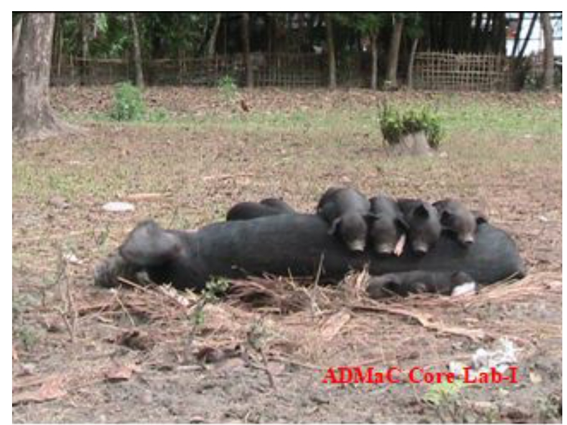
Infected piglets show slight fever and rash.
-
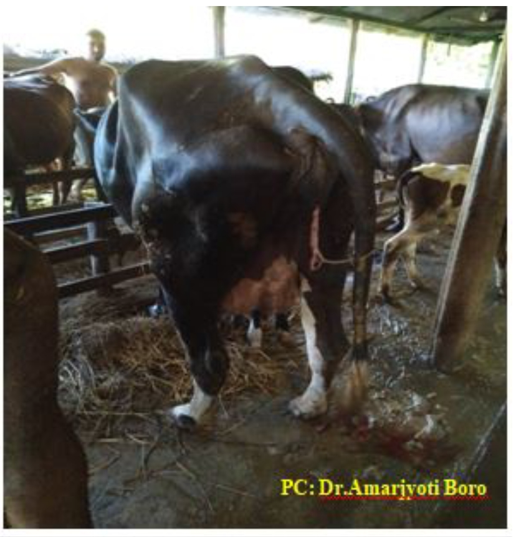
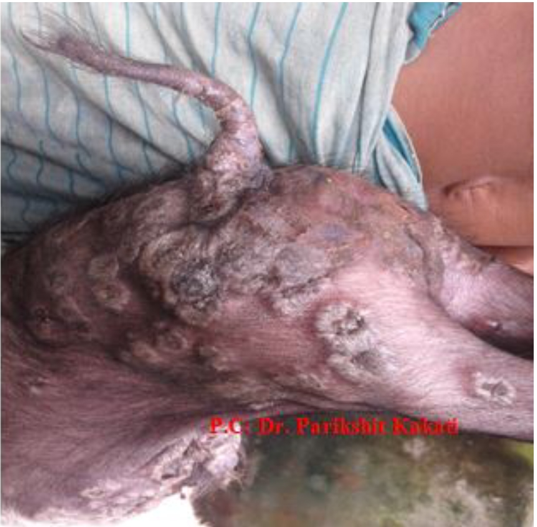
Formation of papules in hairless areas, mainly on the belly.
-
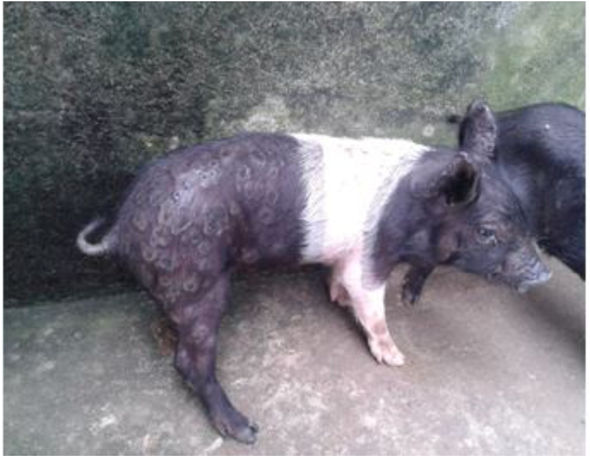
Pustule formation over body surfaces and ears due to pox virus infection.
-
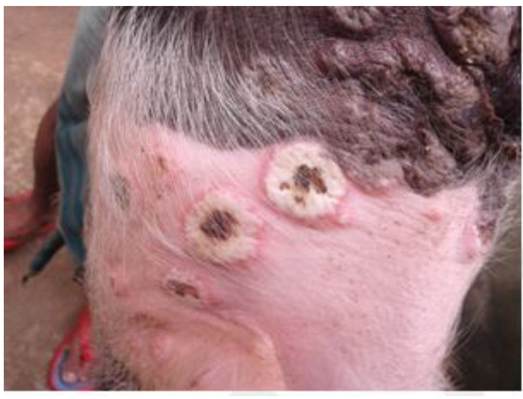
Subsequent whitish pustular growth may be seen.
-
Dry, raised nodules 0.5–4 cm in diameter are observed and turn into scabs.
-
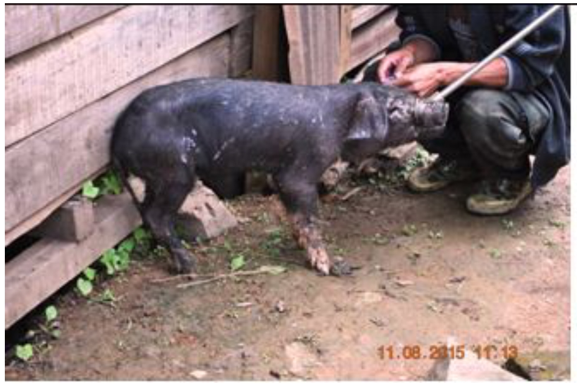
In recovered pigs, dry scabs fall off leaving white scars.
Type of Samples
From ailing pigs: scab materials and cut pieces of affected lesions.
Laboratory Tests
- Serological tests – AGPT, CIE, ELISA.
- Virus isolation.
- PCR.
Whom To Contact
1) Local Veterinarian Officer / Field Assistant.
2) NERDDL, AH & Vety Khanapara, ADMaC Core Lab, AAU.
a) Dr. N. N. Barman
Email: nnbarman@gmail.com
Mob: 09435558788
b) Dr. Abhijit Deka
Email: docabhijit93@gmail.com
Mob: 09864531247
What will you do
- Do not allow pigs to move out.
- Separate the affected ones from the healthy.
- Inform the nearest Veterinary Doctor / Field Assistant.
- Send appropriate samples via Veterinary Doctor / Field Assistant to the nearest diagnostic laboratory / ADMaC Core Lab-I, Khanapara for confirmation.
- Wash affected lesions with potash solution and apply antiseptic ointment.
- Clean farm premises with phenol.