GOAT AFFECTED WITH PPR
Peste des petits ruminants (PPR) is an acute and highly contagious viral disease of small ruminants characterized by high fever, ocular and nasal discharge, pneumonia, necrosis and ulceration of mucous membranes, and gastrointestinal inflammation leading to severe diarrhoea, with very high mortality.
How to Diagnose
-
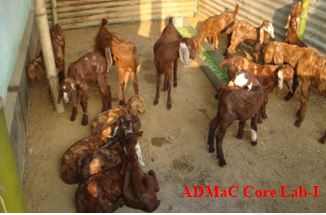
Affected goats show depression, fever (104–106°F), rough hair coat, and oculo-nasal discharge.
-
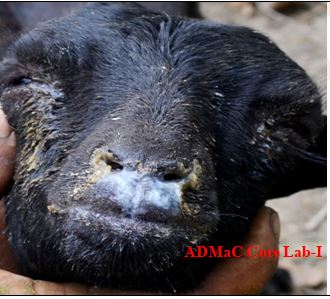
With fever onset, gums become hyperaemic and erosive lesions develop in the oral cavity with excessive salivation and purulent nasal discharge; erosions may resolve or coalesce.
-
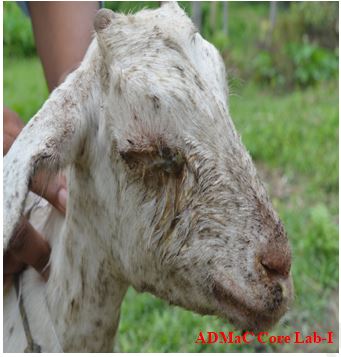
Congested conjunctiva with crusting at the medial canthus and sometimes profuse catarrhal conjunctivitis.
-
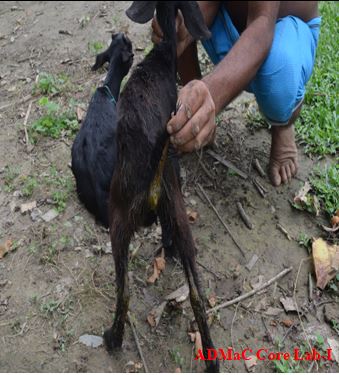
Severe watery, blood-stained diarrhoea is common in later stages.
-
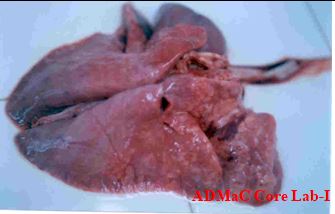
Lungs showing consolidation.
-
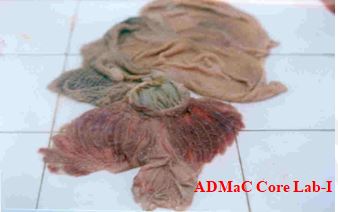
Haemorrhage in the stomach.
Type of Samples
From ailing goats: eye swab, serum, and blood in EDTA; in dead goats: spleen, lung, tonsil, lymph node, kidney, and ileal loop.
Laboratory Tests
- Serological tests – AGPT, CIE, ELISA, VNT.
- Virus isolation.
- PCR.
Whom To Contact
1) Local Veterinarian Officer / Field Assistant.
2) NERDDL, AH & Vety Khanapara, ADMaC Core Lab, AAU.
a) Dr. N. N. Barman
Email: nnbarman@gmail.com
Mob: 09435558788
b) Dr. Abhijit Deka
Email: docabhijit93@gmail.com
Mob: 09864531247
What will you do
- Do not allow goats to move out.
- Separate the affected ones from the healthy.
- Inform the nearest Veterinary Doctor / Field Assistant.
- Supportive treatment with fluids and antibiotics can reduce mortality.
- Send appropriate samples via Veterinary Doctor / Field Assistant to the nearest diagnostic laboratory / ADMaC Core Lab-I, Khanapara for confirmation.
- Bury dead goats in a 5–6 ft deep pit with sufficient common salt/lime or washing soda.
- Clean farm premises with phenol.